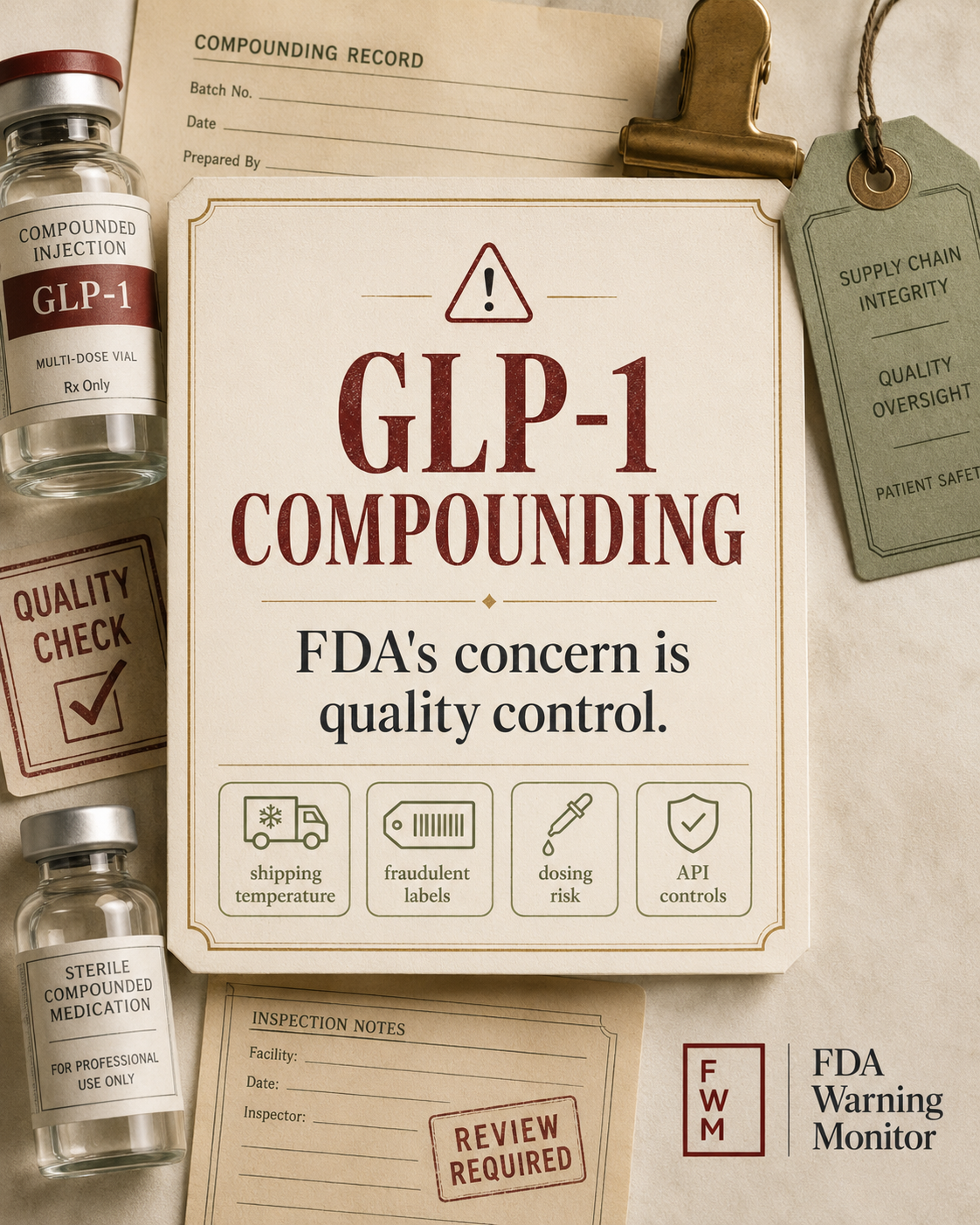
Demand for GLP-1 drugs has pushed semaglutide and tirzepatide into a complicated market. FDA-approved products exist, but FDA has also warned about unapproved compounded versions used for weight loss.
That distinction matters. A compounded drug can be appropriate when a patient's medical need cannot be met by an FDA-approved drug, or when an FDA-approved drug is not commercially available. But compounded drugs are not FDA-approved, and FDA does not review them for safety, effectiveness, or quality before they are marketed.
What FDA is flagging
FDA's public GLP-1 concern page points to several practical risk areas:
unapproved compounded drugsshipping temperaturefraudulent labelsdosing errorsAPI import controls
The common thread is not one company or one pharmacy. It is the strain that fast demand can put on a drug supply chain when patients, clinics, compounders, online sellers, and API suppliers are all moving at once.
Why the refrigeration issue matters
FDA says injectable GLP-1 drugs require refrigeration as stated in their package inserts. The agency has received complaints that some compounded GLP-1 drugs arrived warm or with inadequate ice packs.
That is not just a shipping nuisance. For sterile injectable products, temperature control is part of product quality. If a product arrives warm, FDA recommends patients not use it because quality may be affected.
Fraud risk is now part of the enforcement picture
FDA has also described fraudulent compounded semaglutide and tirzepatide products marketed in the U.S. Some labels allegedly used pharmacy names that did not match who actually compounded the product. In other cases, the listed pharmacy did not exist.
For clinics, pharmacies, and patients, the practical question becomes: can the source be verified, and does the label match a licensed pharmacy that actually produced the medicine?
The API signal
FDA has also pointed to import controls for GLP-1 active pharmaceutical ingredients with potential quality concerns. That matters because poor-quality API can affect the entire downstream compounded product, even when the final seller looks legitimate.
What to watch next
For anyone tracking FDA enforcement signals, GLP-1 compounding is a high-signal lane because it combines public demand, patient safety, supply constraints, online marketing, pharmacy regulation, and drug quality oversight.
The next useful signals will likely show up in warning letters, import alerts, state pharmacy board actions, adverse-event language, and FDA updates on unapproved GLP-1 products.
FDA Warning Monitor is keeping this lane on watch. Join the weekly FDA enforcement digest for source-backed warning-letter, recall, and enforcement notes.
Prefer LinkedIn? Follow FDA Warning Monitor for public FDA warning-letter, recall, and enforcement signals.
Sources
FDA: Concerns with unapproved GLP-1 drugs used for weight loss
FDA: Compounding and the FDA, questions and answers